


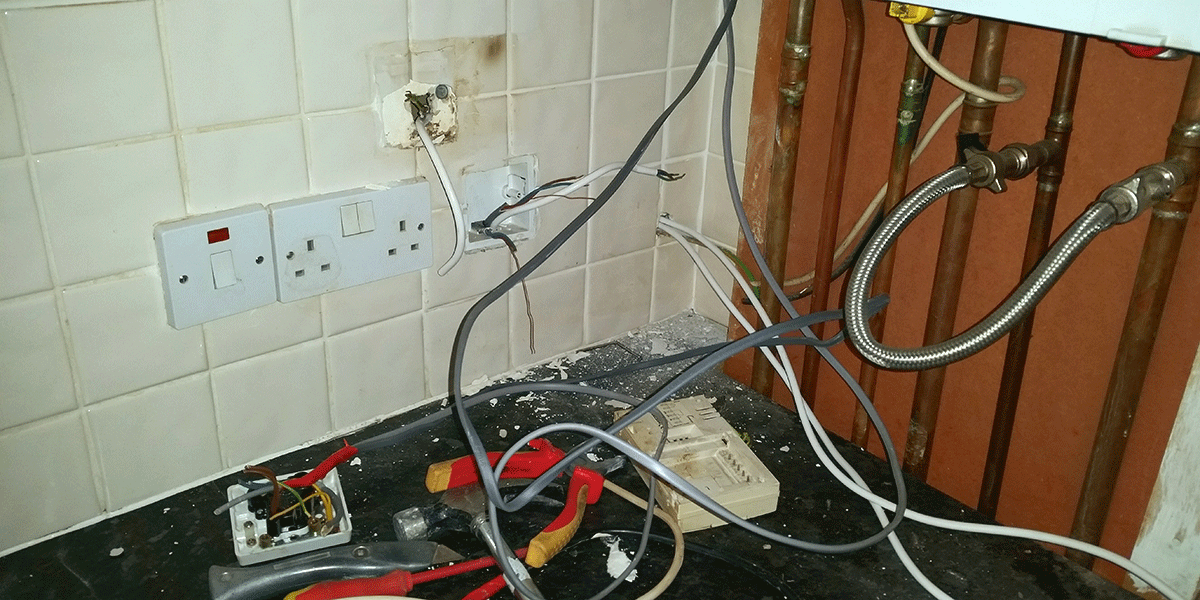
The flood has receded, but muddy marks above the outlets show how high it reached. As you plan water damage restoration, hidden wiring damage could still make turning on the lights dangerous.
In this guide, Clean Remodel explains how to check your electrical system after a flood. It outlines what visible damage may indicate and why you may need professional testing.
Establish Safety Before Approaching Electrical Equipment
If you’re unsure how to check your electrical system after a flood, contact an electrician before entering affected areas. Standing water can conduct current from energized wiring, even after the storm has passed. Basic electrical safety precautions take priority over inspection.
An outage does not confirm the supply is disconnected; service can return without warning. If you see arcing or smell smoke, leave immediately and call 911 from a safe location.
Document Visible Damage Without Touching Equipment
After professionals confirm safe entry, record visible conditions from a dry location. Leave covers in place and take the following measures:
- Photograph the waterline to show the highest level reached.
- Record discoloration around outlets or switches without touching them.
- Note sediment or rust on equipment exteriors.
- List appliances exposed to floodwater, including those that were switched off.
- Estimate how long the affected area remained submerged.
Share this record with your electrician to guide the inspection. Photographs help establish exposure but cannot confirm whether concealed components are safe.
Arrange a Licensed Electrician’s Inspection
A professional electrical safety assessment examines contamination and damage that cannot be judged from outside the equipment. The inspection typically includes the following:
- The electrician checks the panel and service equipment for moisture or residue.
- An electrical wiring inspection identifies the cable types exposed to floodwater.
- Appropriate tests assess insulation integrity and grounding continuity.
- Affected appliances receive a separate evaluation before reconnection.
Use the report to plan repairs to flood-damaged electrical systems and confirm that the contractor’s proposal covers every identified issue.
Understand What Needs Replacement
Drying water-damaged electrical equipment does not make it safe to reuse. Floodwater residue can impair internal mechanisms even after moisture evaporates.
When evaluating circuit breaker and outlet damage, electricians generally recommend replacing submerged devices rather than cleaning them. Their protective functions and connections may no longer operate reliably.
Some larger assemblies, such as panelboards or switchgear, may qualify for professional reconditioning. Qualified personnel must consult the manufacturer to determine whether restoration is permitted and which procedures to follow.
Use Temporary Power Safely During Repairs
Battery lanterns provide illumination while damaged circuits remain disconnected. Keep a charged phone available for updates and emergency calls.
Use a portable generator only outdoors, at least 20 feet from the house, with exhaust directed away from openings. Keep battery-operated carbon monoxide alarms functioning throughout the property.
Never plug a generator into a household outlet. Any connection to permanent wiring requires an electrician-installed transfer arrangement that prevents backfeeding into utility lines.
Wait for Clearance Before Restoring Power
Once you understand how to check your electrical system after a flood, confirm what approvals are needed before restoring power. Your electrician can advise whether completed repairs require a local inspection or utility authorization.
Keep appliances unplugged until they’re cleared for use, even if they appear undamaged. Resetting a breaker to see whether it trips doesn’t prove its protective mechanism works reliably. Leave reconnection to the professionals responsible for the final sign-off.
Reduce the Risk of Future Water Damage
After repairs, ask your electrician whether vulnerable equipment can be relocated above expected flood levels. Any changes must meet local requirements and preserve access for maintenance.
Also address sources of recurring moisture. Check supply hoses for wear and consider leak sensors near appliances. Ask a plumber for advice on preventing damage from household fixtures and have unreliable connections repaired.
For properties exposed to outdoor flooding, have a qualified contractor review drainage around the foundation. Downspouts should direct runoff away from the building, while clogged gutters need attention.
Get Professional Help With Flood Recovery
Now that you know how to check your electrical system after a flood, you can plan the cleanup and repairs your home needs. Clean Remodel provides water removal and interior reconstruction across Greater Boston once the site is safe to access.
Our licensed contractors and certified cleaning and restoration professionals bring more than 20 years of industry experience. Understanding flood damage versus water damage can also help you prepare questions for your insurer about coverage.
Call (781) 686-9687 to discuss your property’s recovery with our team.