


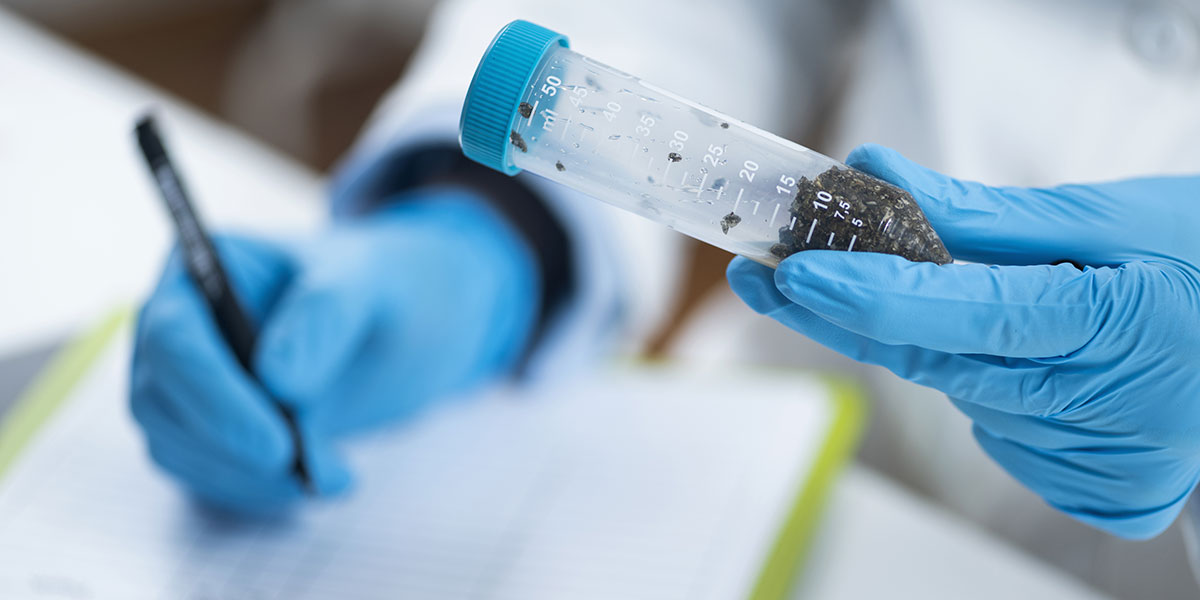
With indoor air testing, the report you receive compares household spore counts with an exterior control sample. If these numbers differ, how should you interpret the results?
Clean Remodel created this guide to explain mold test results and the limits of laboratory sampling. The guide also explains how inspection findings may indicate the need for mold remediation in Boston.
What Does Your Lab Report Measure?
Your laboratory report describes what was detected in the submitted samples from your home, not the conditions throughout the entire property. For air testing, mold spore concentration is commonly estimated per cubic meter using the collected volume. However, air sampling results show only what was airborne at the chosen locations during the collection period.
Ventilation and nearby activity can change spore levels. One reading may not represent the mold concentration in other areas.
Understanding Mold Identification Results
The analysis of detected spores may help with mold species identification. In nonviable microscopy, Aspergillus and Penicillium are commonly grouped because their spores look similar.
Culture-based or molecular techniques may provide a more specific classification, though a routine count cannot measure mycotoxins. The results can show which mold categories were observed, but they typically cannot establish the extent of the contamination.
Why Are Indoor and Outdoor Spore Counts Compared?
Professionals interpret mold test results by comparing indoor readings with an outdoor control collected during the same visit. They also examine which spore groups appear and how their relative amounts differ.
Weather can influence the exterior baseline. No federal pass-or-fail threshold exists, and mold contamination levels represent only one part of your indoor air quality assessment.
Why Must Moisture Findings Be Considered?
Moisture readings can reveal damp materials, while a visual assessment can detect surface changes and visible mold growth. Reviewing common areas for mold growth helps focus the inspection on locations where leaks may occur or humidity remains elevated. Still, a low airborne reading does not exclude contamination outside the sampled area.
How Do Findings Shape the Remediation Process?
Effective mold remediation recommendations reflect laboratory data and inspection findings. The process generally follows this sequence:
- Define the scope: Identify which areas and materials require treatment.
- Correct the moisture source: Repair leaks or control excess humidity.
- Perform remediation: Clean salvageable surfaces and remove materials you cannot save.
- Verify completion: Confirm that the affected area is dry and arrange follow-up testing.
When growth is already visible, sampling before cleanup begins is often unnecessary.
Review Your Options With Clean Remodel
At Clean Remodel, we consider laboratory data and inspection findings when evaluating the property. We bring more than 20 years of janitorial and restoration experience. Our owner founded Magic Cleaning Services II in 2002 and managed commercial cleaning accounts across Greater Boston before joining one of the largest disaster restoration companies in Massachusetts.
If you would like more information about mold growth in cold weather or the various remediation options we provide, please call (781) 686-9687 to discuss the options. Our team includes licensed contractors and professionals certified in cleaning and interior restoration who can help you interpret the mold test results and plan the next steps.